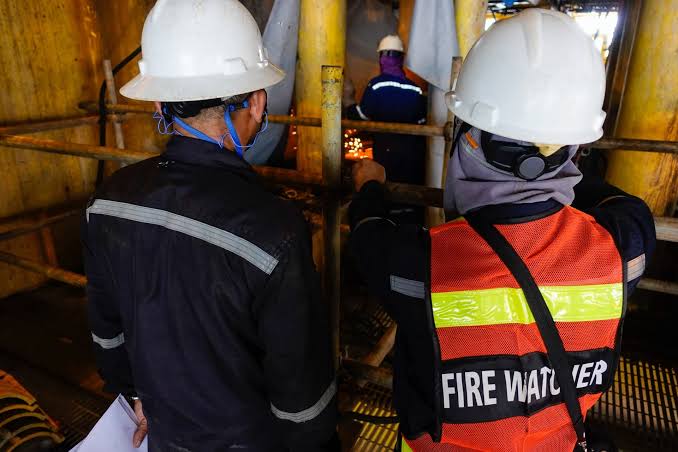
Industrial facilities—manufacturing plants, chemical processing sites, warehouses, and refineries—operate in environments where fire risk is both elevated and constant. The combination of heavy machinery, flammable substances, and continuous operations creates conditions that demand rigorous safety infrastructure. According to the NFPA, industrial and manufacturing fires cause over $1 billion in property damage annually in the United States, a figure that does not account for production losses, worker compensation claims, or regulatory fines. For operations managers and safety officers in these environments, engaging a professional fire watch guard company is a foundational component of a serious fire prevention strategy.
What Makes Industrial Environments So Vulnerable to Fire?
The fire risks present in industrial settings are more varied and harder to control than those found in standard commercial properties. Contributing factors typically include:
Flammable and combustible liquids: Fuels, solvents, lubricants, and chemical feedstocks are present throughout many industrial operations.
Combustible dust: Accumulated dust from materials such as wood, grain, metal, and plastic can form explosive concentrations in enclosed spaces.
High-temperature processes: Furnaces, kilns, dryers, and heat exchangers operate continuously at temperatures capable of igniting nearby materials.
Aging infrastructure: Older industrial facilities may have electrical systems and fire suppression equipment that no longer meet current code standards.
24-hour operations: Round-the-clock production schedules mean fire risks are present at all hours, including during shift changes when communication gaps are more likely.
Fire Watch Requirements Specific to Industrial Facilities
Industrial operations fall under multiple overlapping regulatory frameworks that govern fire safety. OSHA’s Process Safety Management (PSM) standard, NFPA 30 for flammable and combustible liquids, and local fire codes each impose fire watch obligations under specific conditions.
Common triggers for mandatory fire watch in industrial facilities include:
Hot work conducted within 35 feet of flammable materials or equipment
Shutdown of fire suppression systems for maintenance or repair
Spillage or release of flammable liquids in or near a production area
Emergency repairs that require welding or cutting in areas not normally designated for hot work
The Scope of Fire Watch in an Industrial Setting
Fire watch guard programs in industrial facilities must be tailored to the specific hazards present at each site. A one-size-fits-all approach is not sufficient. Effective programs typically incorporate:
Site-specific hazard assessments conducted before guard deployment begins
Specialized training for guards on the chemical and process hazards present at the facility
Integration with the facility’s emergency response plan, including coordination with in-house emergency brigades
Confined space and PPE awareness, where guards may need to monitor near restricted areas
Shift-aligned scheduling to ensure continuous coverage across all production hours
Facilities with particularly high hazard levels—such as petroleum refineries or chemical plants—may require guards to hold additional certifications relevant to those environments.
Reducing Downtime Through Proactive Fire Watch
One often-overlooked benefit of professional fire watch services in industrial settings is their contribution to operational continuity. When a suppression system requires maintenance, facilities without a fire watch plan face a difficult choice: shut down production or operate with reduced fire protection. With a fire watch program already in place, the maintenance window can proceed on schedule without halting operations.
This ability to maintain production during planned outages has a direct financial impact. Unplanned shutdowns in industrial environments can cost hundreds of thousands of dollars per day. Fire watch services, by enabling safe system maintenance without production stoppages, deliver a measurable return on investment.
Building a Culture of Fire Safety in Industrial Operations
Beyond regulatory compliance, the most fire-safe industrial facilities are those where fire prevention is embedded in organizational culture. Fire watch guards reinforce that culture through their visible presence and consistent documentation. When workers see fire watch personnel actively monitoring hot work and patrol areas, the message is clear: fire safety is a priority, not a formality.
Safety directors who treat fire watch as a strategic asset—rather than a reactive obligation—tend to operate facilities with lower incident rates, better insurance terms, and stronger regulatory relationships.
About the Author